
Methods of Production
Progressive Hardening
Achieved by scanning the surface of the material, rapidly heating it and immediately quenching at a controlled speed. The speed of travel determines the depth of hardness and is adjusted based on the application.
Progressive Hardening Applications
Bushings
Cams
Capstans
Cast Bed Ways
Crane Drums
Dies
Gears
Feed Screws
Lagging Drums
Liners
Machine Ways
Pallets
Punches
Rails
Rings
Sheaves
Sprockets
Tracks
Spin Hardening
A process where a part is rotated while surrounded by flame ejectors. Once the proper temperature is reached, the part is quenched through spraying or submersion. This method provides uniform hardening on cylindrical components.
Spin Method Applications
Gears
Rollers
Shafts
Wheels
Pulleys
Sheaves
Combination Hardening
Combines progressive and spin techniques to deliver uniform heating and quenching across rotating parts, ensuring consistent hardness and performance.
Combination Hardening Applications
Arbors
Rams
Rolls
Shafts
Piston Rods
Trunnions
Featured Applications
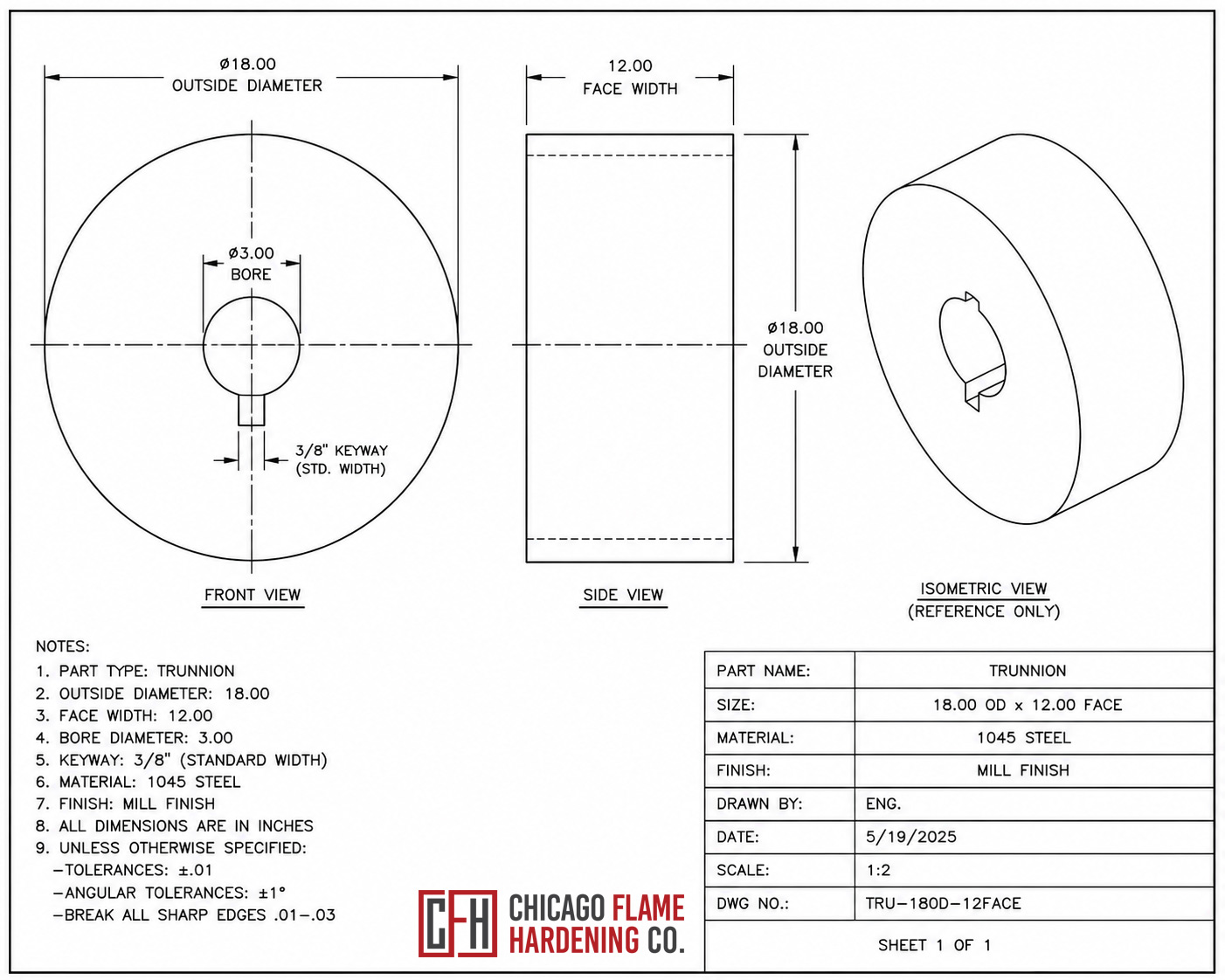
Wheels & Sheaves
The cost of wheels can be reduced by finishing ODs with flame hardening. We can work with wheels made of cast iron, ductile iron or steel.
Sheaves typically require groove hardening only, making flame hardening an efficient and economical solution.
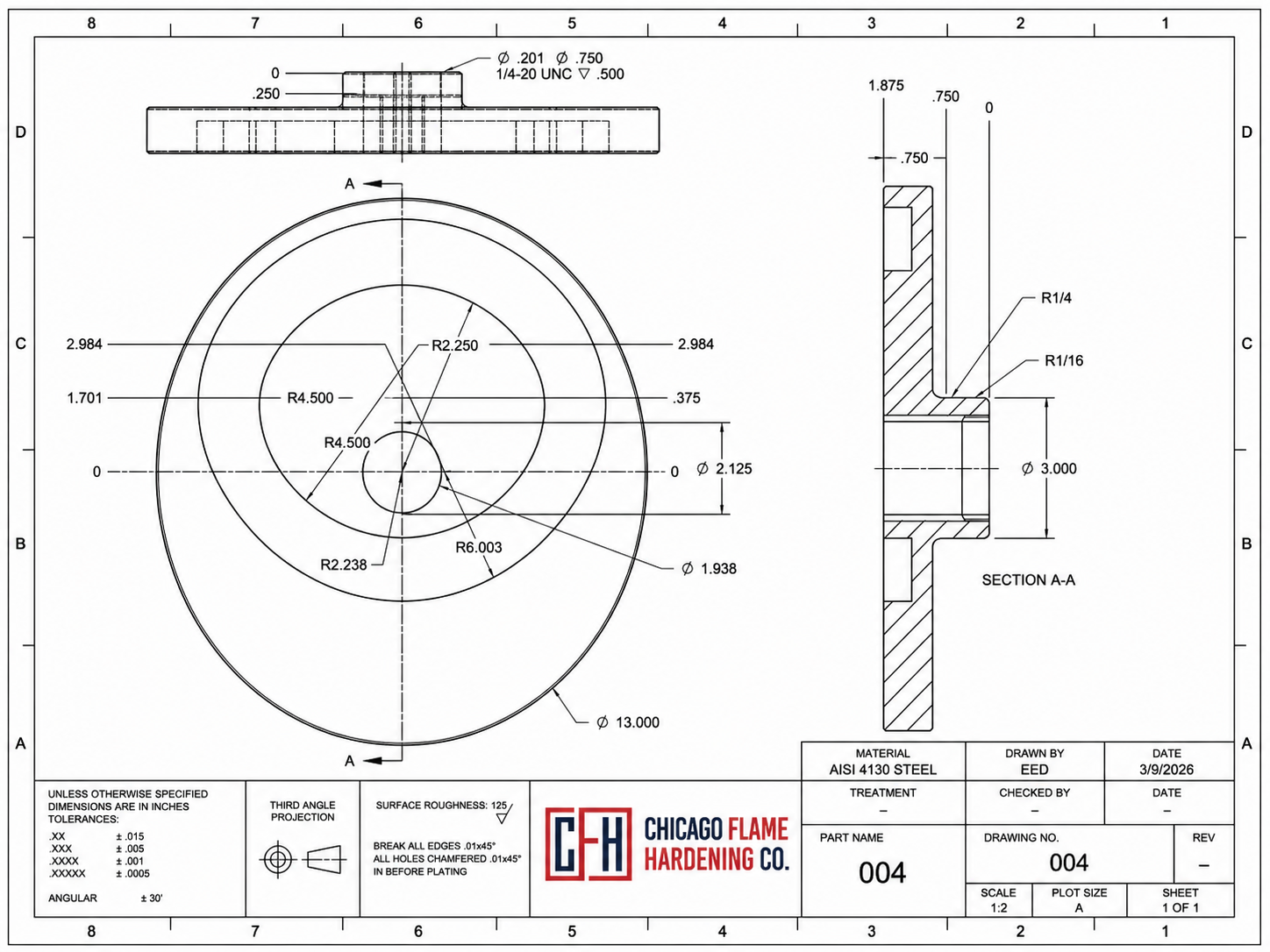
Cams
By selectively hardening cam paths, we can provide a superior wear surface on outside diameter cams, box cams, or barrel cams. This eliminates the need for costly tool steels and reduces finishing time.
Pre-heat treated steels (280–320 Brinell) are recommended when improved core properties are required.
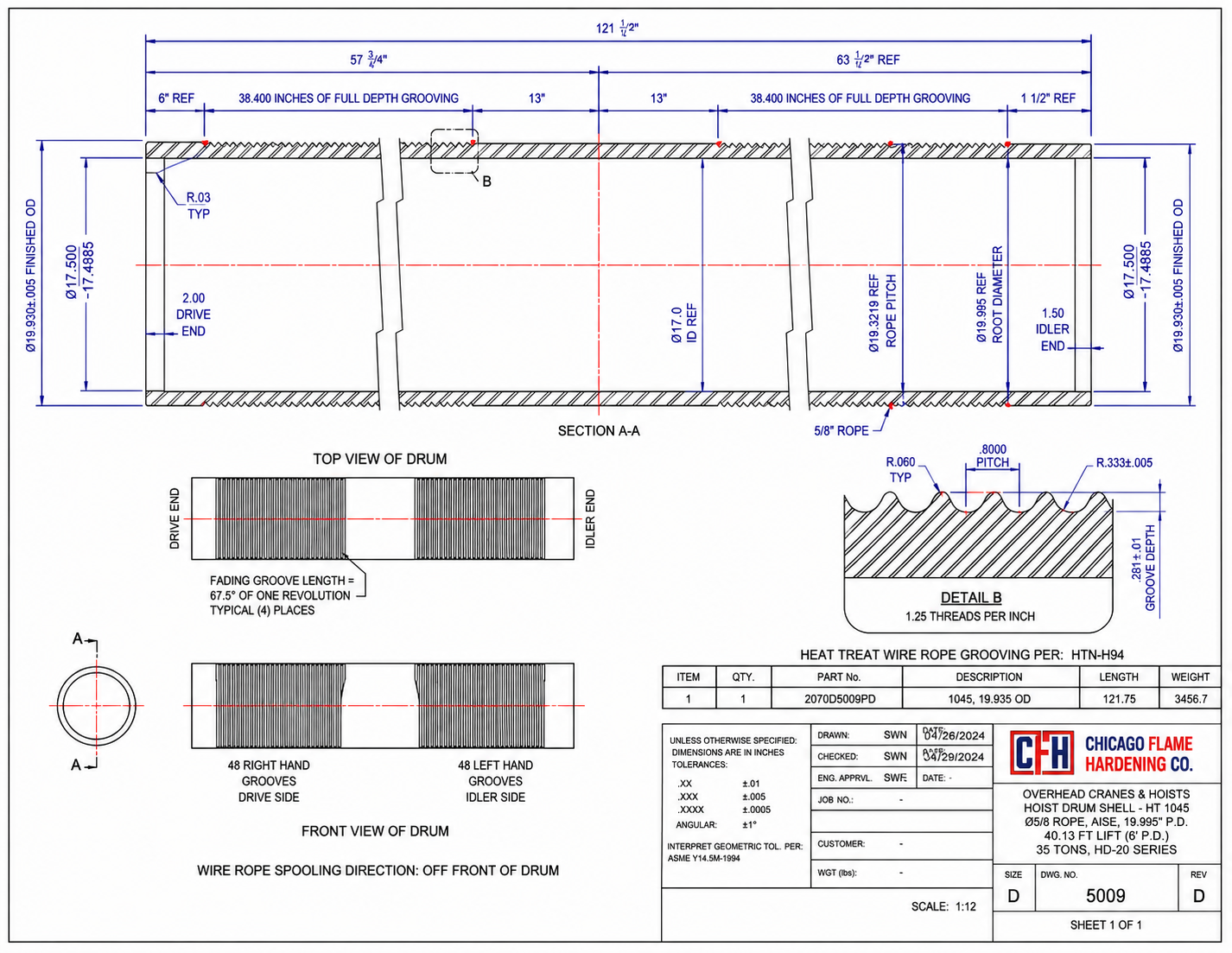
Cable Drums
Flame hardening is ideal for both cast and fabricated cable drums. By selectively hardening the groove area, distortion is minimized while durability is increased.
Our facilities have processed drums exceeding 30 ft in length and 10 ft in diameter, weighing up to 100,000 lbs.
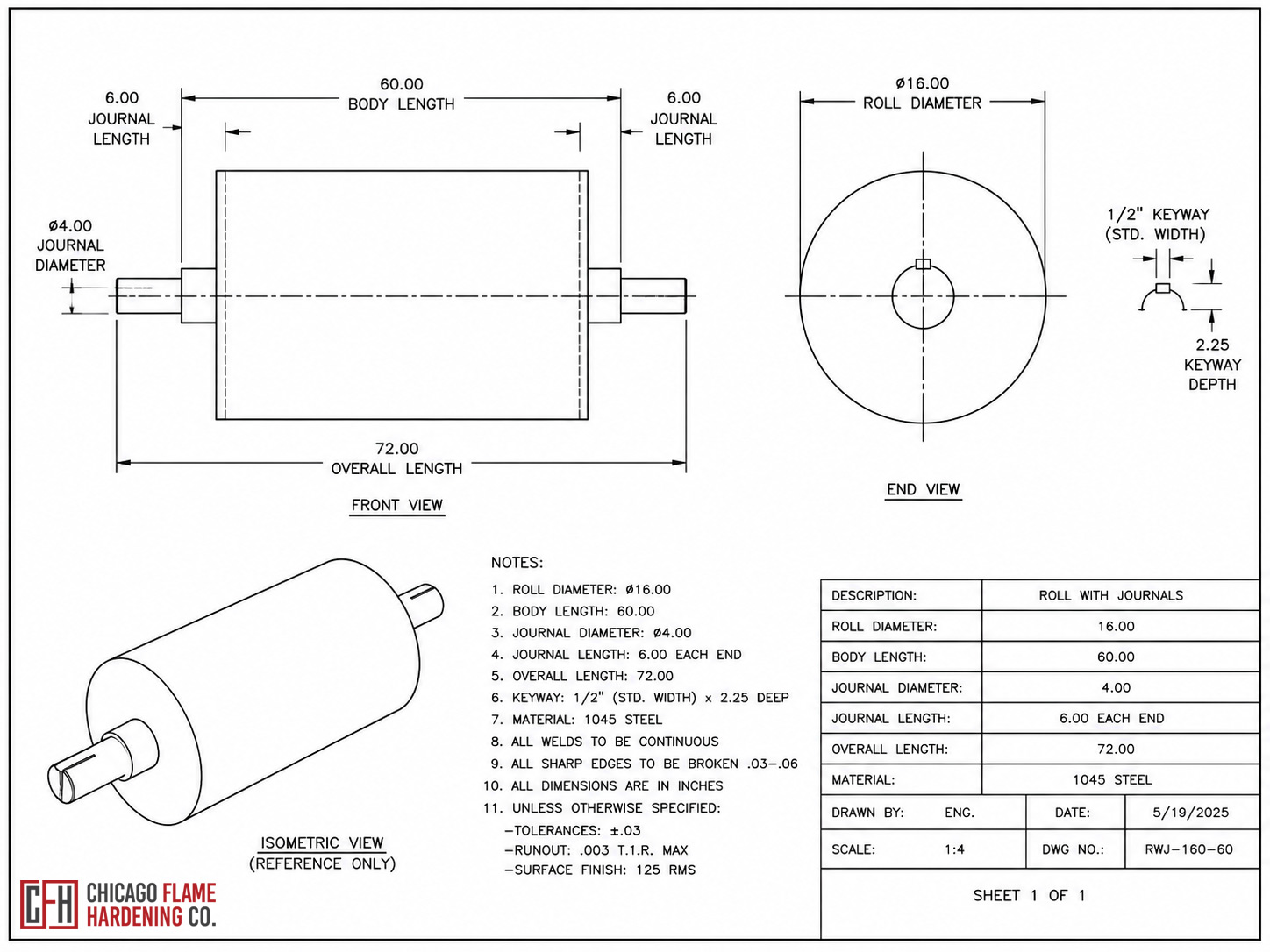
Rolls & Shafts
Flame hardening is the best way to heat-treat large and outsized rolls. This process provides less distortion and higher surface hardness, combined with ductility and core strength.
Our process involves selectively hardening varying diameters on the roll body, bearing fits, along with the journals when required. Flame-hardening of rolls provides a better wear surface, uniform case, maximum hardness, while leaving a both a tough and ductile core.
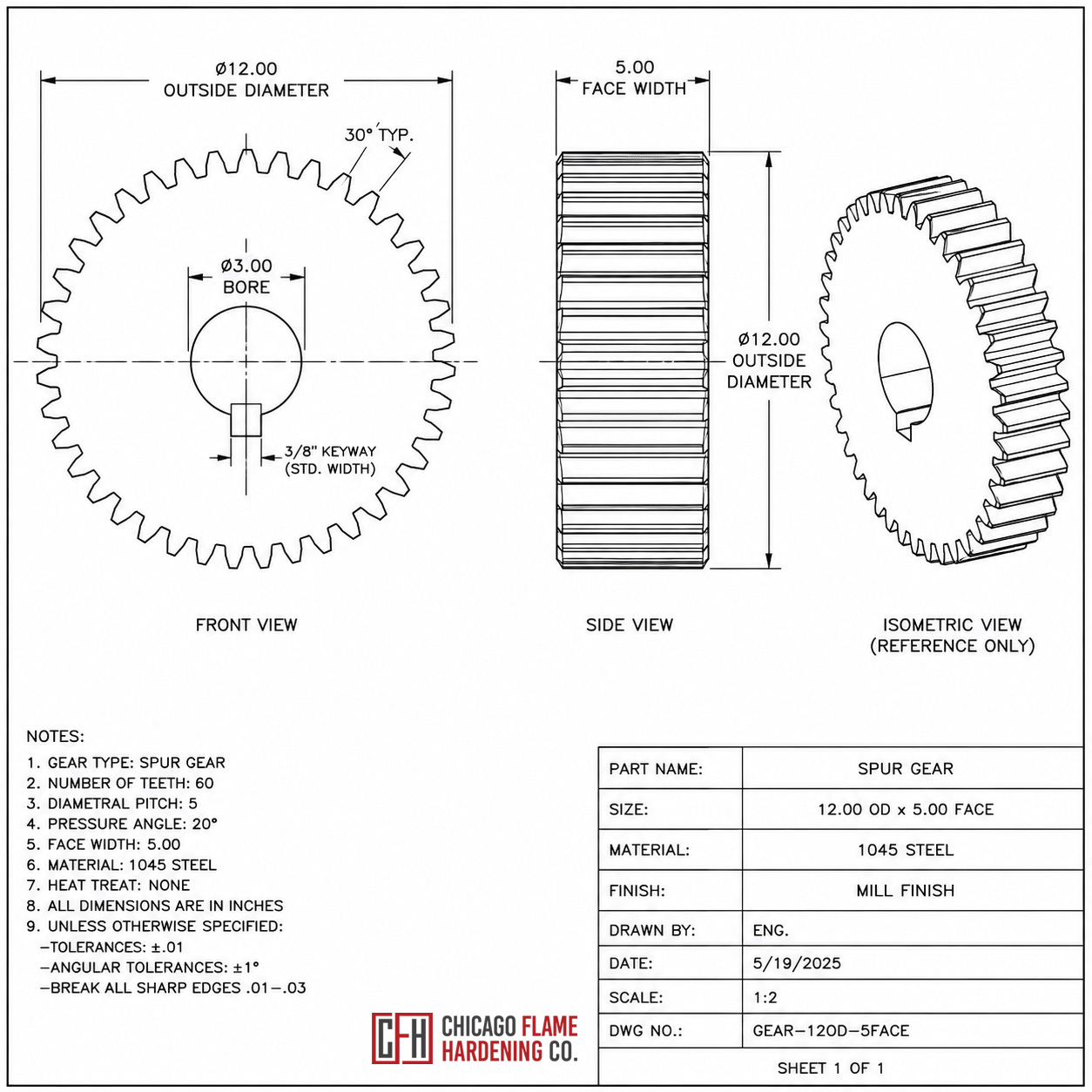
Gears & Sprockets
Gears, sprockets and gear racks benefit the most from quality flame hardening. Replacement of worn gears can be expensive, time consuming and difficult.
We can give you maximum durability for longer wear by treating only the contact surfaces of the teeth, leaving the core material unchanged for strength and flexibility to extend the life of gears.
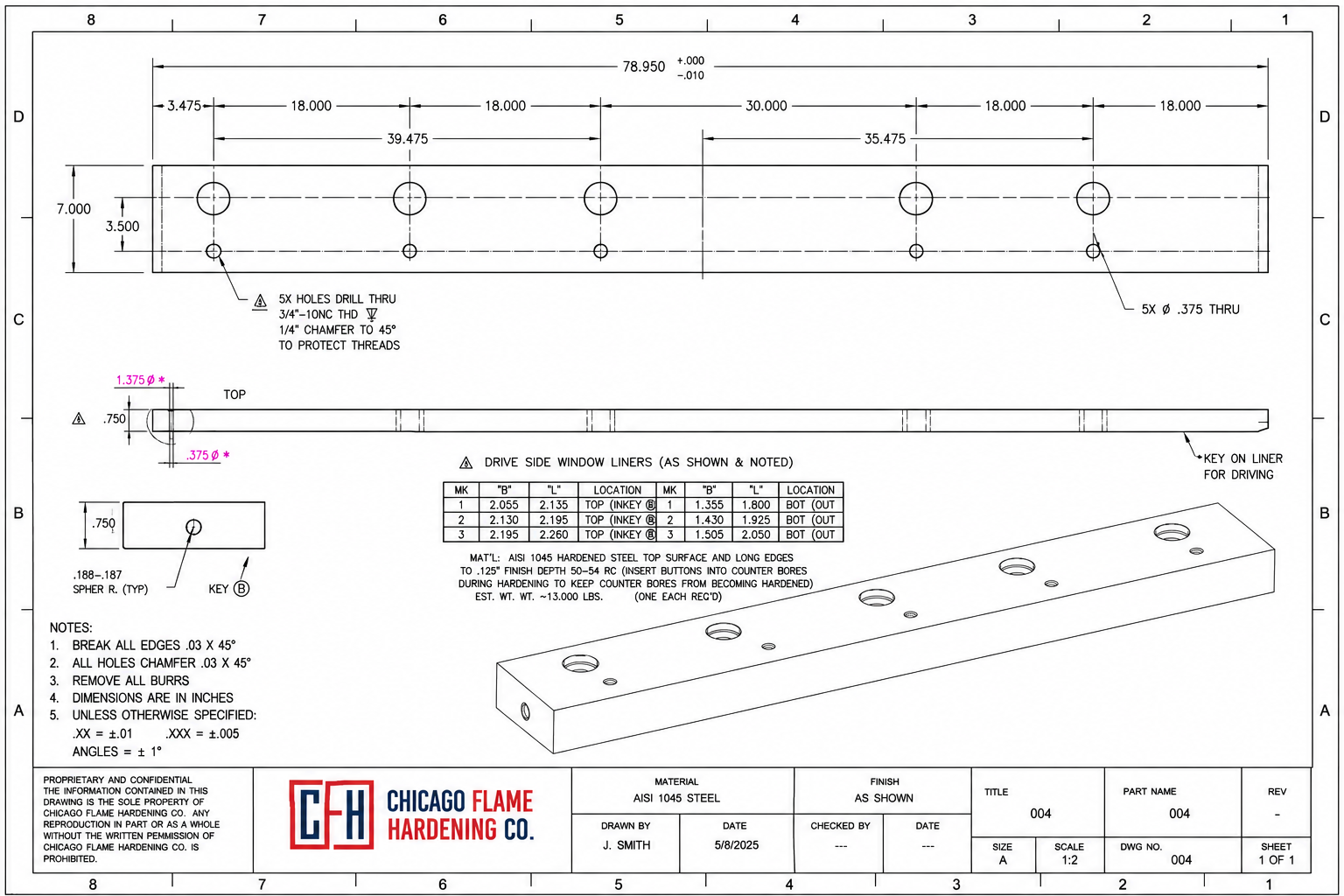
Liners, Rails & Ways
Ideal for large or uniquely shaped components requiring selective wear resistance.
Our process ensures consistent hardening while maintaining dimensional accuracy and minimizing distortion.
Contact our technical staff to discuss parameters for straightening tolerances and grind stock allowances prior to manufacture.

Plan your flame-hardening project
Identify the surfaces that need wear resistance, such as gear teeth, roll surfaces, shafts, rails or machine ways. Our East Chicago, Indiana team can review how progressive, spin or combination hardening fits the part geometry and the areas marked on your drawing.
Specify hardness and material requirements
Include the material grade, target hardness scale and range, treated surfaces, and any case-depth requirements. Tell us the existing heat-treatment condition and remaining machining or grinding allowance. A material name alone does not establish the finished hardness a component will achieve.
Use our hardness conversion and material reference guide for initial planning, then confirm the drawing and acceptance requirements with our team.
What to send for a flame-hardening quote
Send the drawing, overall dimensions, weight, quantity and required delivery date. Identify inspection requirements and restrictions on distortion or surface finish. If the part also needs stress relieving or mechanical straightening, include the required processing sequence.
Request a project quote, email sales@cflame.com, or call (219) 397-6475.